
How to Import Medicines from India: The Complete Step-by-Step Guide
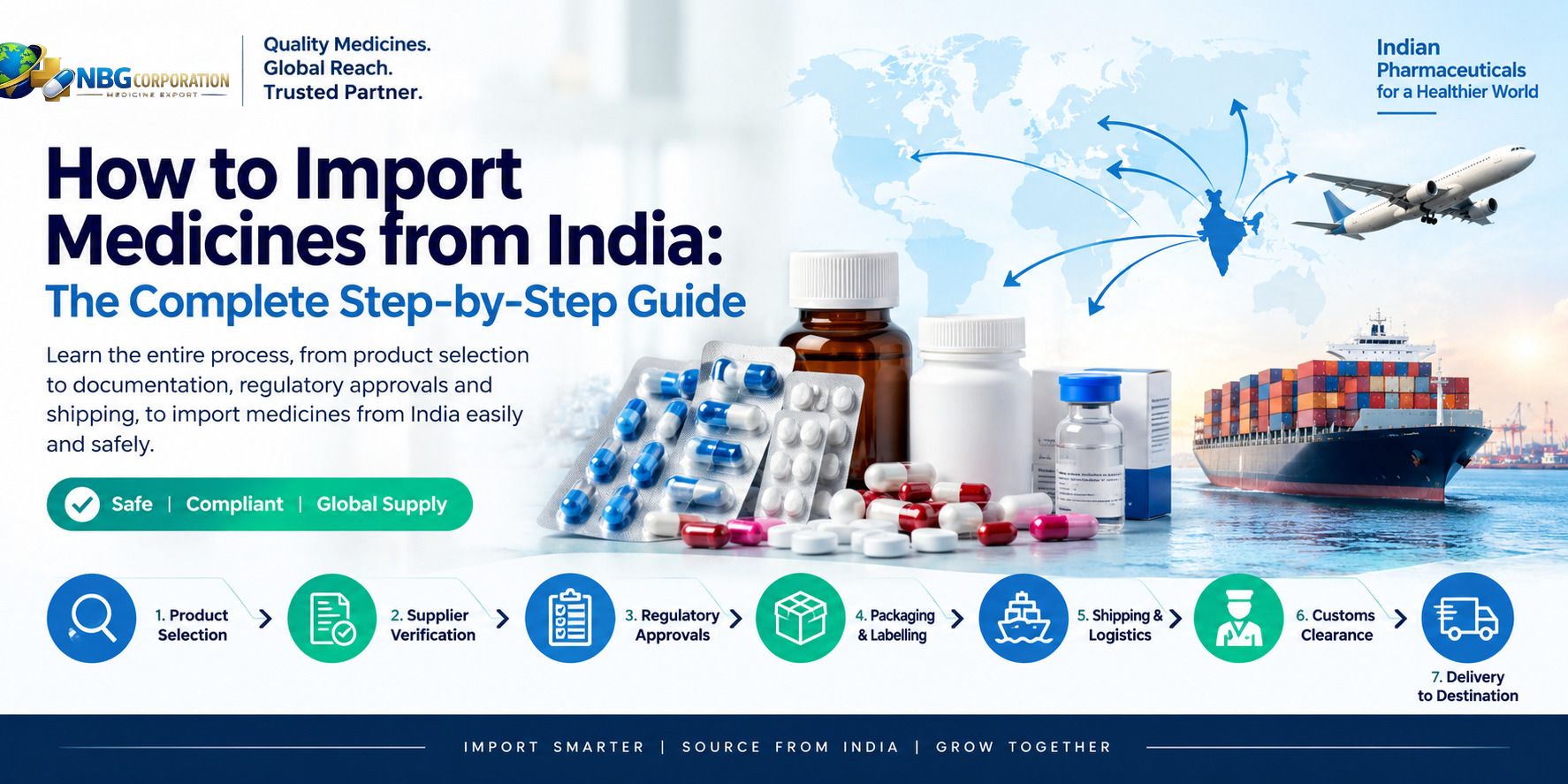
How to Import Medicines from India: The Complete Step-by-Step Guide
India is an important source of pharmaceutical products for international markets. Importers, distributors, wholesalers and healthcare businesses may consider Indian suppliers when sourcing medicines for their local markets.
However, importing medicines involves more than finding a supplier and arranging delivery. Buyers must check product availability, supplier credentials, regulatory requirements, documentation, shipping conditions and total costs before placing an order.
This guide explains how to import medicines from India in a series of practical steps.
Step 1: Identify the Medicines You Need
Start by preparing a clear list of the pharmaceutical products you want to import. Include the information needed for a supplier to assess your enquiry.
Your list should include:
- Product name and required strength
- Dosage form, such as tablets, capsules or injections
- Required quantity
- Preferred packaging
- Destination country
- Expected order frequency
If you plan to source several products, organise them into a single enquiry. This helps suppliers review your requirements and provide more accurate quotations.
Before proceeding, check whether each product can legally be imported and marketed in your destination country.
Step 2: Find a Reliable Pharmaceutical Supplier in India
The next step is to identify suitable pharmaceutical suppliers, exporters or trading companies in India.
Review their business information, product portfolio, communication practices and experience with international enquiries. Confirm whether they manufacture products directly or source them from other manufacturers.
Before selecting a supplier, consider:
- Whether the supplier handles your required product categories
- Whether product and manufacturer details can be verified
- Whether the supplier can provide the required documentation
- Whether the supplier understands your destination market's requirements
- Whether quotations and delivery terms are clearly explained
Avoid choosing a supplier based on price alone. Reliable communication, appropriate documentation and regulatory suitability are also important.
Step 3: Verify Product Quality and Documentation
Before placing an order, request the documents relevant to the product and destination market.
Depending on the product and applicable regulations, these may include:
- Manufacturing or relevant business licences
- Product registration or marketing authorisation documents
- Certificate of Analysis, where applicable
- Product specifications
- Certificate of Pharmaceutical Product or other quality documents, where required
- Product labels and packaging details
- Batch, expiry and shelf-life information
The exact documents required will vary by medicine and importing country. Verify the documents with the supplier and the relevant regulatory authority before making a commercial commitment.
Step 4: Check Import Regulations in Your Country
Pharmaceutical regulations differ from country to country. A medicine that is available in one market may require registration, special authorisation or other approvals before it can be imported into another.
Before ordering, confirm:
- Whether the product is authorised for import or sale
- Whether your business needs an importer licence or wholesale authorisation
- Whether product registration or prior approval is required
- Which labelling and packaging rules apply
- Whether there are restrictions on the product or its shipment
- Whether additional permits or certificates are required
Importers should consult their national medicines regulator or a qualified local regulatory professional. Do not assume that a supplier's ability to export a product automatically means it can be legally imported into your country.
For information about India's regulatory framework, refer to the official Central Drugs Standard Control Organisation (CDSCO).
Step 5: Request a Quotation from the Supplier
Once your product requirements and regulatory checks are clear, request a detailed quotation.
Provide your product list, quantities, destination country and preferred delivery arrangements. Ask the supplier to confirm product availability and the conditions attached to the quotation.
Review the following before proceeding:
- Price per product and total order value
- Minimum order quantity, if applicable
- Packaging and labelling requirements
- Estimated preparation and dispatch timelines
- Payment terms
- Shipping arrangements and delivery terms
- Quotation validity
Make sure the quotation matches your actual requirements. Clarify any differences in product strength, pack size, brand, packaging or other specifications before confirming the order.
Step 6: Calculate the Total Import Cost
The quoted product price is only one part of the total cost of importing medicines.
Depending on the shipment and destination, other expenses may include:
- International freight
- Insurance
- Customs duties and applicable taxes
- Customs clearance charges
- Inspection or testing fees
- Regulatory and documentation costs
- Local transportation and storage
Ask your supplier and freight forwarder to clarify which charges are included in the quotation and which will be payable separately.
A complete cost estimate helps you assess the commercial viability of the order and plan your selling price or distribution margin.
Step 7: Prepare the Required Export and Import Documents
Correct documentation helps reduce avoidable delays during shipping and customs clearance.
Depending on the destination and transaction, documents may include:
- Pro forma invoice
- Commercial invoice
- Packing list
- Bill of lading or air waybill
- Certificate of Origin, where required
- Certificate of Analysis, where applicable
- Product registration or import permits
- Applicable quality and regulatory certificates
- Other documents requested by customs or the relevant medicines regulator
The supplier, importer, customs broker and freight forwarder should confirm the final document checklist before dispatch.
Check that product names, quantities, packaging details and consignee information are consistent across the relevant documents.
Step 8: Arrange Shipping and Product Handling
Pharmaceutical products must be shipped under conditions appropriate to their requirements.
Depending on the product, this may involve specific temperature ranges, protection from moisture or light, or other handling precautions.
Before dispatch, confirm:
- The appropriate shipping method
- Packaging and transport requirements
- Any temperature-control arrangements
- Shipment tracking and insurance
- Estimated transit time
- The receiving arrangements at the destination
Ensure that the selected shipping method complies with applicable transport and import requirements. Products requiring special handling may need additional arrangements.
Step 9: Complete Customs Clearance and Receive the Shipment
When the shipment reaches the destination country, the importer or appointed customs broker must complete the applicable clearance procedures.
Authorities may review the shipment documents, permits, product details and other required information. Additional checks may apply depending on the product and country.
To prepare for receipt:
- Confirm that the required import approvals are in place.
- Submit the documents requested by customs and relevant authorities.
- Pay applicable duties, taxes and clearance charges.
- Arrange delivery to an appropriate receiving facility.
- Inspect the shipment for damage and check quantities, batch details and expiry dates.
Follow applicable storage requirements after receipt. If you identify discrepancies or damage, document the issue and contact the relevant supplier or logistics provider promptly.
Step 10: Build a Long-Term Supplier Relationship
For businesses that import medicines regularly, a dependable supplier relationship can help simplify future purchasing.
After completing an order, review product conformity, documentation accuracy, communication, delivery performance and how any issues were handled.
For repeat orders, maintain clear product specifications and keep relevant records. Review regulatory requirements periodically because product approvals and import rules can change.
A consistent supplier evaluation process can help your business make better-informed sourcing decisions over time.
Common Mistakes to Avoid When Importing Medicines
Avoid these common mistakes during the pharmaceutical import process:
- Selecting a supplier without verifying its credentials
- Assuming every medicine can be imported into every country
- Placing an order before checking product registration requirements
- Overlooking documentation, duties or shipping costs
- Ignoring packaging, shelf-life or transport conditions
- Making payments without clearly agreed commercial terms
- Failing to confirm the shipment details before dispatch
Careful preparation helps reduce uncertainty and supports a smoother import process.
Frequently Asked Questions
1. How can I import medicines from India?
Identify the products you need, find a suitable supplier, verify the supplier and product documents, check your country's import regulations, request a quotation and arrange compliant shipping and customs clearance.
2. How do I find a pharmaceutical supplier in India?
Search for pharmaceutical suppliers and exporters with relevant product experience. Review their business credentials, documentation, product range, communication and ability to meet your destination country's requirements.
3. What documents are required to import medicines?
Requirements vary by country and product. Common documents may include a commercial invoice, packing list, transport document, applicable permits, product authorisations and relevant quality certificates.
4. Can I import generic medicines from India?
Generic medicines may be available for international sourcing, but their import and sale depend on the destination country's regulations, product approvals and applicable intellectual property requirements. Verify these requirements before ordering.
5. How much does it cost to import medicines from India?
The total cost depends on product prices, order quantity, freight, insurance, customs duties, taxes, documentation, clearance and any special handling requirements. Request a detailed quotation and estimate the full landed cost.
6. How long does pharmaceutical shipping take?
Shipping time depends on the destination, transport method, supplier preparation time, customs procedures and regulatory checks. Ask the supplier and logistics provider for an estimate based on your shipment.
7. Do I need a licence to import medicines?
Many countries require importers to hold relevant licences or authorisations. Some products may also require separate registration or approval. Confirm the rules with your local medicines regulator before placing an order.
Conclusion
Importing medicines from India requires careful supplier selection, product verification, regulatory checks and proper shipping documentation. By following a structured process, international buyers can assess suppliers more effectively and prepare for pharmaceutical sourcing with greater confidence.
If your business is looking for pharmaceutical products from India, contact NBG Corporation with your product list, required quantities and destination country to enquire about your sourcing requirements.
Important note: Import requirements vary by country and product. This article provides general business information and should not replace advice from the relevant regulatory authority or a qualified compliance professional.